Nikkosynth 0.2.59 · Windows · macOS · Linux

The only synth
you need.

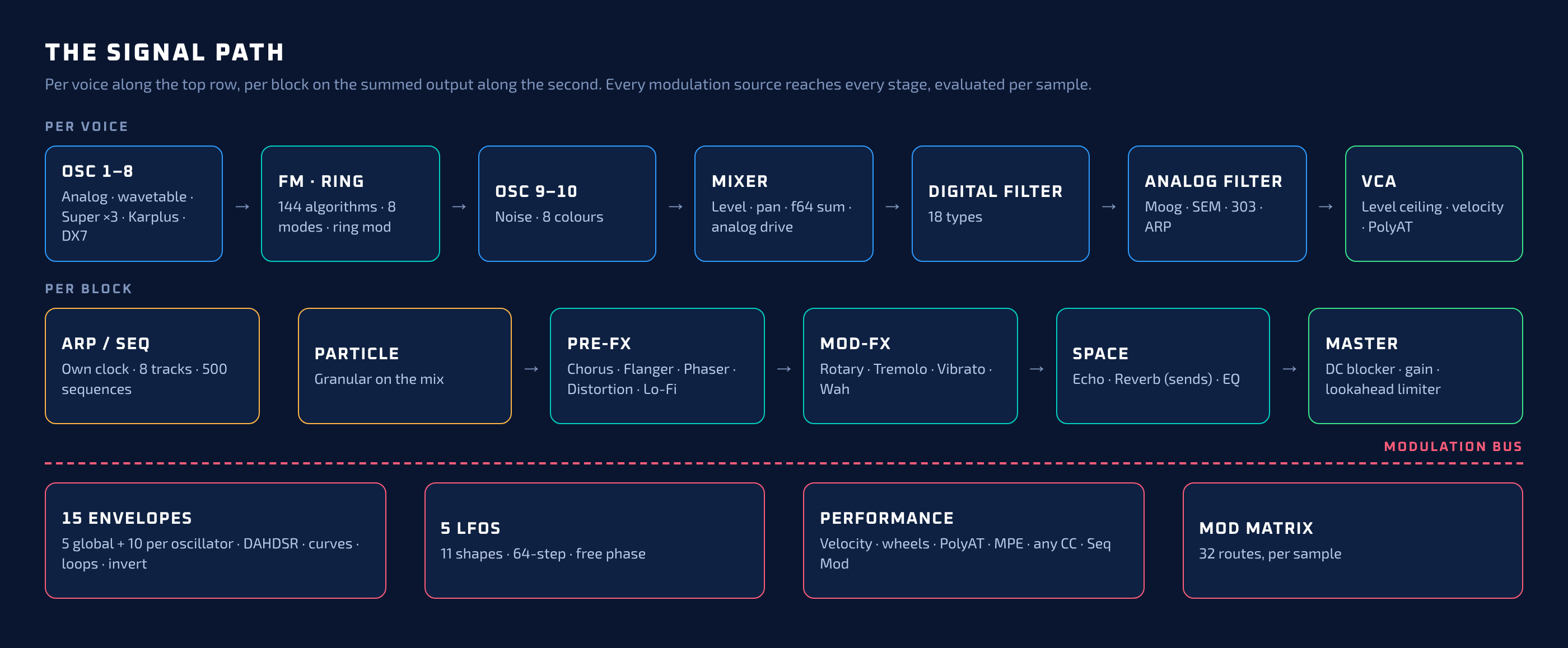
Ten oscillators of six kinds, two filters in series, fifteen envelopes, five LFOs, a 32-slot matrix, an eight-track sequencer and twelve effects — in one window, with two thousand patches ready to play.

No account, no time limit. $89 for a personal licence when you are ready.

NikkosynthLIVE
128 CUTOFF15 ENV32 ROUTES2000 PATCHES
0
Oscillators
0
Patches
0
Sequences
0
Skins

What it is

One instrument, not a rack

Five synthesis methods sharing one modulation system — so a pad, a bass, a DX7 piano and a physical string are all the same ten oscillators, in the same window, with the same filters and effects behind them.

01

Ten oscillators, six kinds

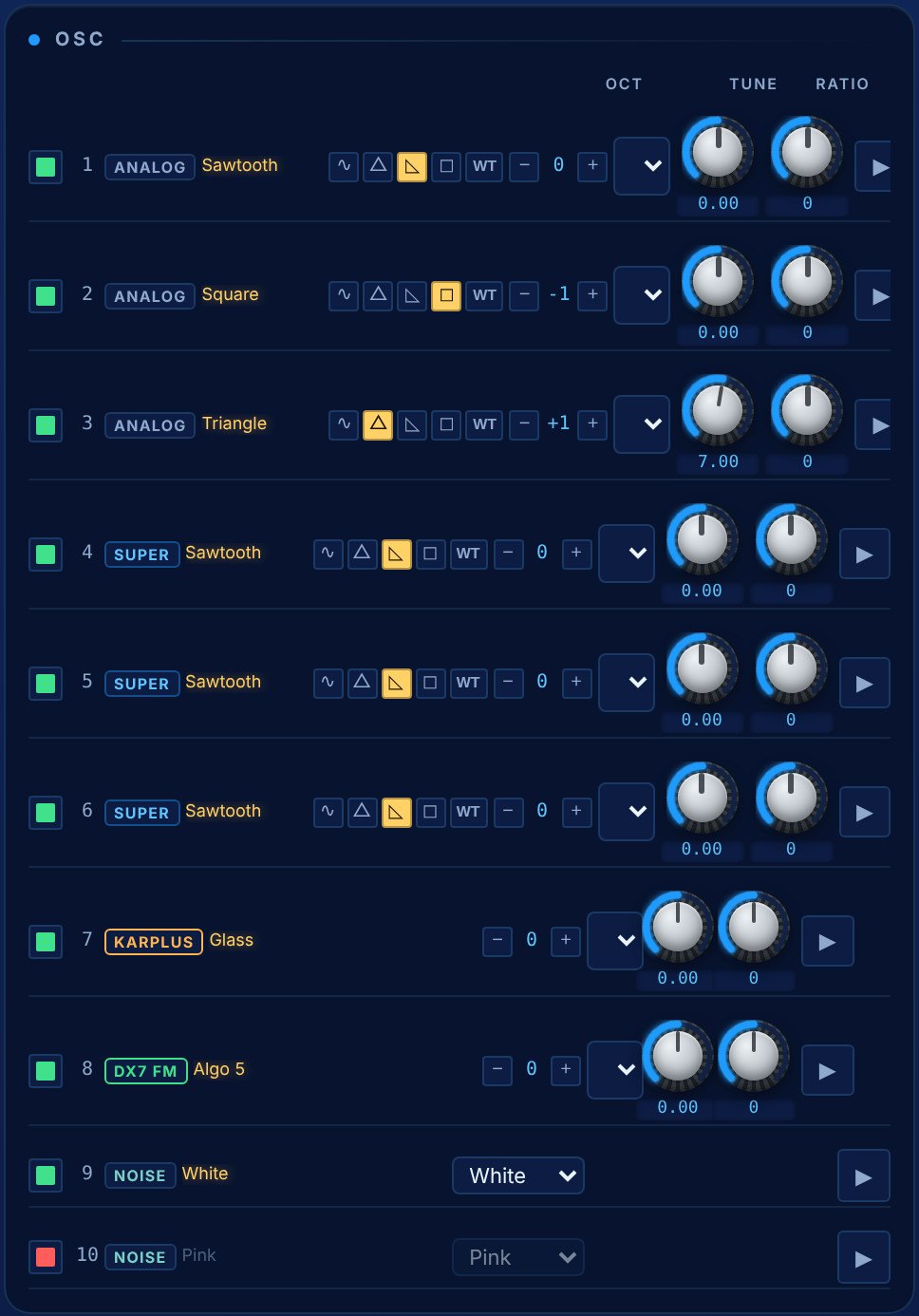
Three analogue (band-limited, or any of 451 wavetables), three Super stacks, a Karplus-Strong physical model, a six-operator DX7 engine and two noise oscillators in eight colours. A pad, a bass, a piano and a string can all be one patch.

02

Two filters in series

Eighteen digital models — SEM morph, MS20, ladders, a Vowel filter — then four analogue circuits modelled by topology: MINI, SEM, ACID and ARP. Each switches independently.

03

Fifteen envelopes

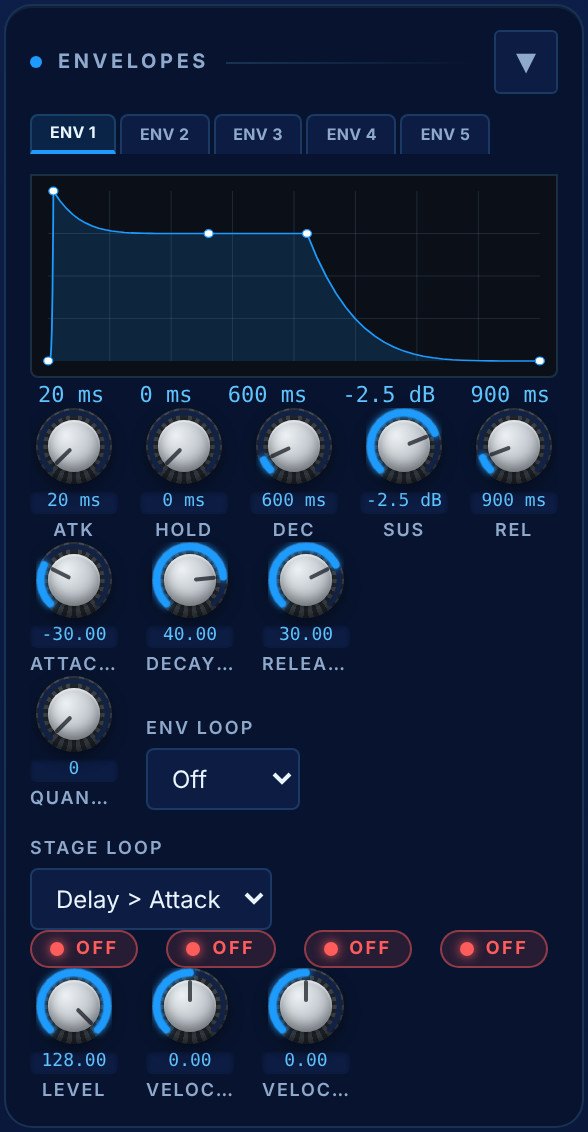
Five global envelopes plus one inside every oscillator. Per-segment curves, quantise, loops, Legato, Reset, Freerun — and Invert, so a sweep can dip instead of rise.

04

An eight-track sequencer

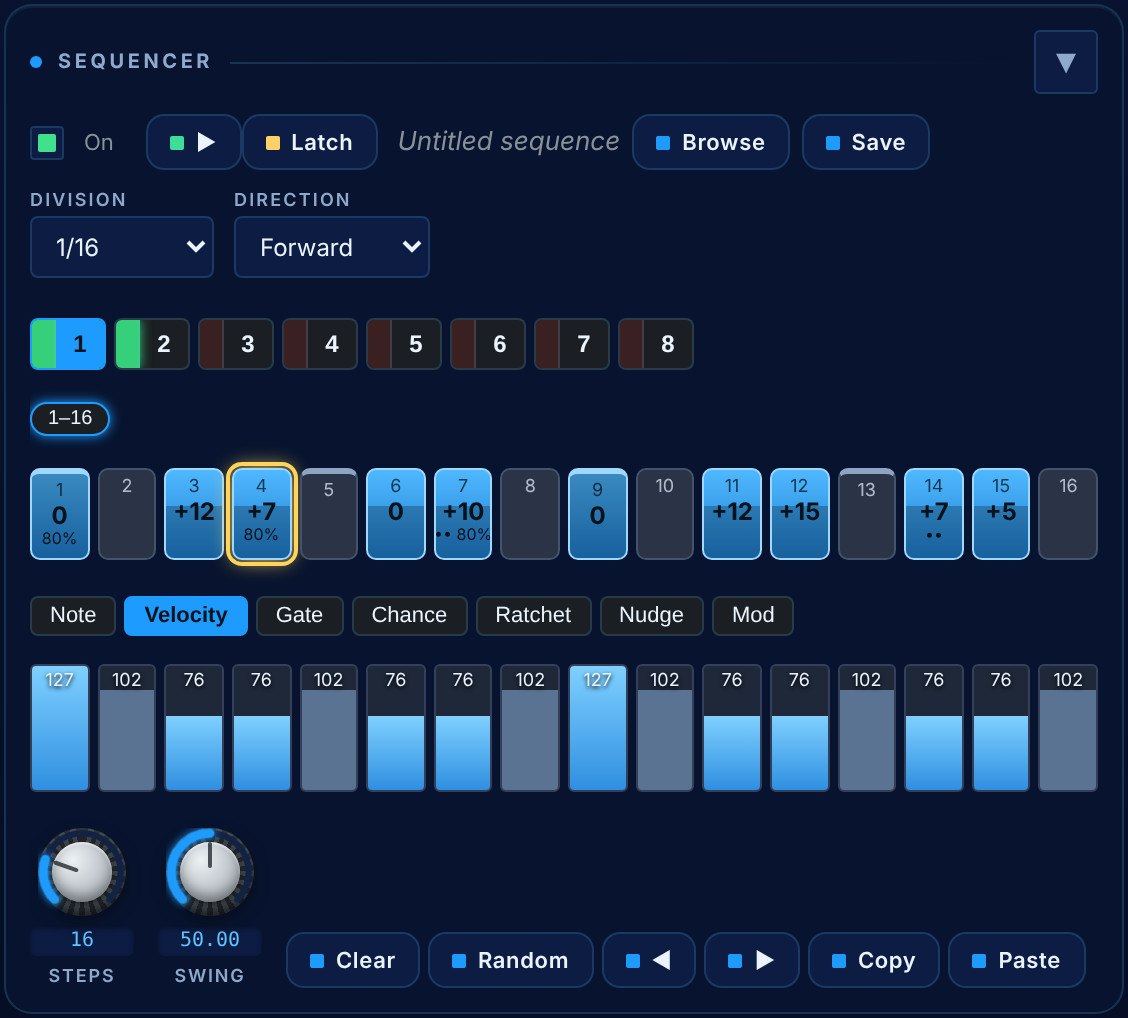
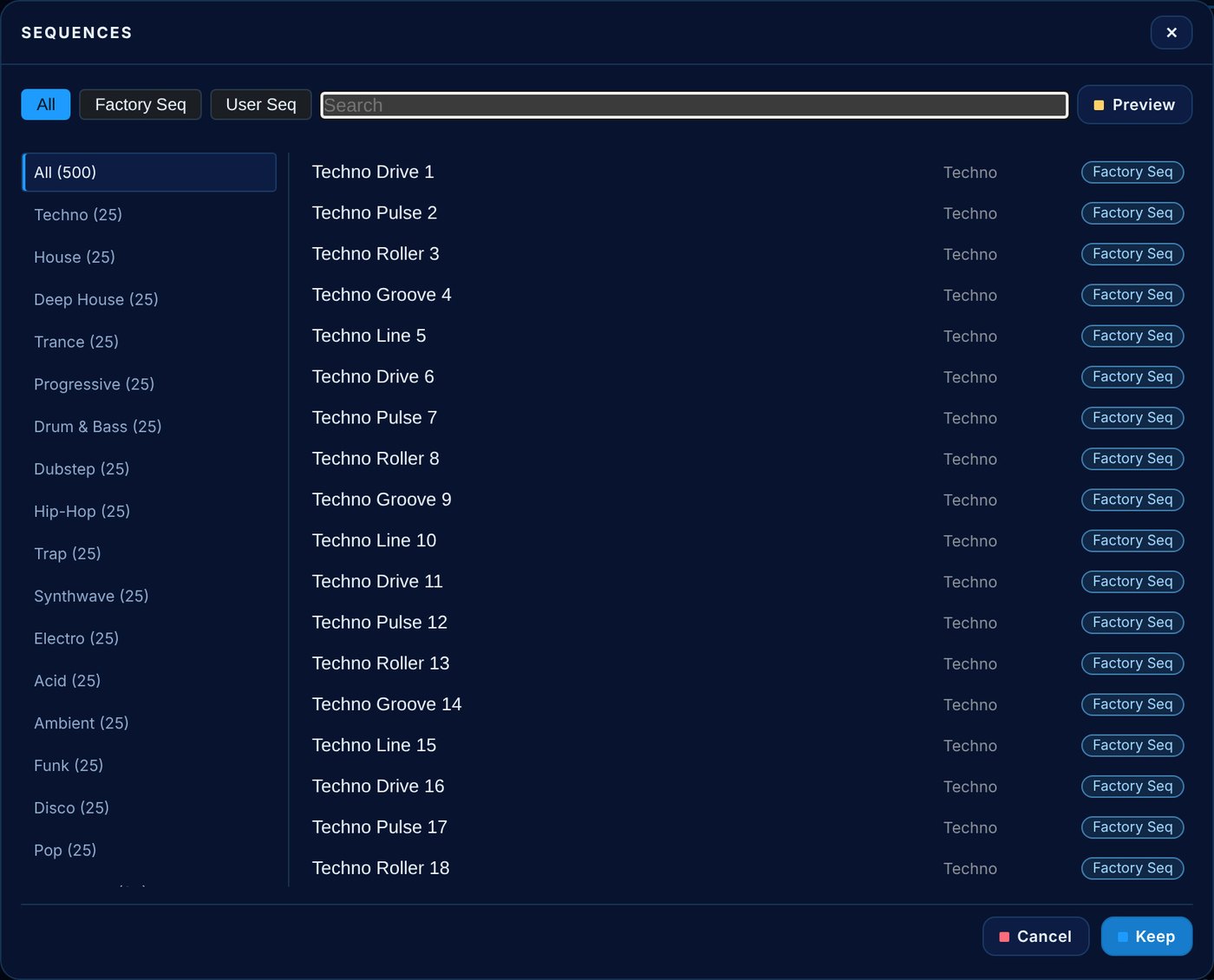
Up to 64 steps per track with their own lengths, seven lanes per step (note, velocity, gate, chance, ratchet, nudge, mod), its own clock — and a library of 500 sequences in twenty genres.

05

A 32-slot modulation matrix

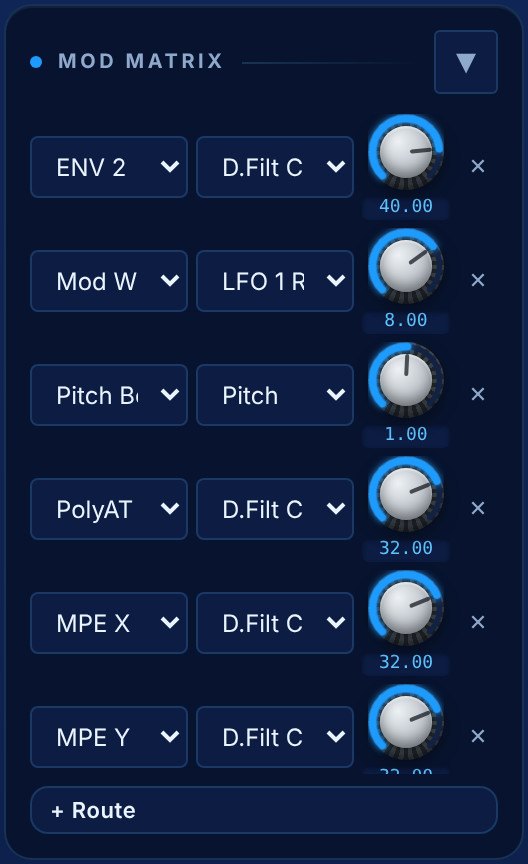
Every envelope, LFO, wheel, MPE axis, any CC and the sequencer's Mod lane, routed per sample to pitch, pulse width, Super detune, ring depth, filters and more. The wheels and aftertouch are pre-wired.

06

Twelve effects

Chorus, flanger, phaser, distortion, Lo-Fi, rotary, tremolo, vibrato, wah, a multitap echo, five reverbs with a real shimmer, and a five-band EQ with a curve you can drag.

07

2,000 patches

Hand-authored seeds, the Complex, Noisy and Super families, a game-audio SoundFX kit and 200 Pure Analog patches made the way a Minimoog made them. Click a patch and it plays, with a Details panel of what it uses and how complex it is. Your own banks leave as encrypted .nik soundbanks, with a cover, an author and terms the buyer approves.

08

Mono, Glide and microtuning

True legato mono with portamento, sixteen voices, MPE, and seven tunings from Just to Werckmeister and Rast, or your own twelve notes in cents.

09

Your panel, your way

Drag plates into columns, fold them, reset in one click. 89 skins, eleven languages, full-interface zoom, and Mutate (F8) for a fresh take on any patch.

Under the hood

Why it sounds like hardware

The parts that are hard to fake are the parts that were measured rather than approximated.

Band-limited everywhere

Every oscillator plays from a pyramid of single-cycle tables, one per half-octave, holding only the harmonics that fit under Nyquist at that pitch. At A7 the 13th-harmonic alias of a naive ramp measures 7.7 % of the fundamental; here it is 0.029 %.

  • Analogue waves, pulse widths and all 451 wavetables alike
  • Pulse width is a saw minus a shifted saw — band-limited at any duty
  • The wavetable ladder is built when the table loads
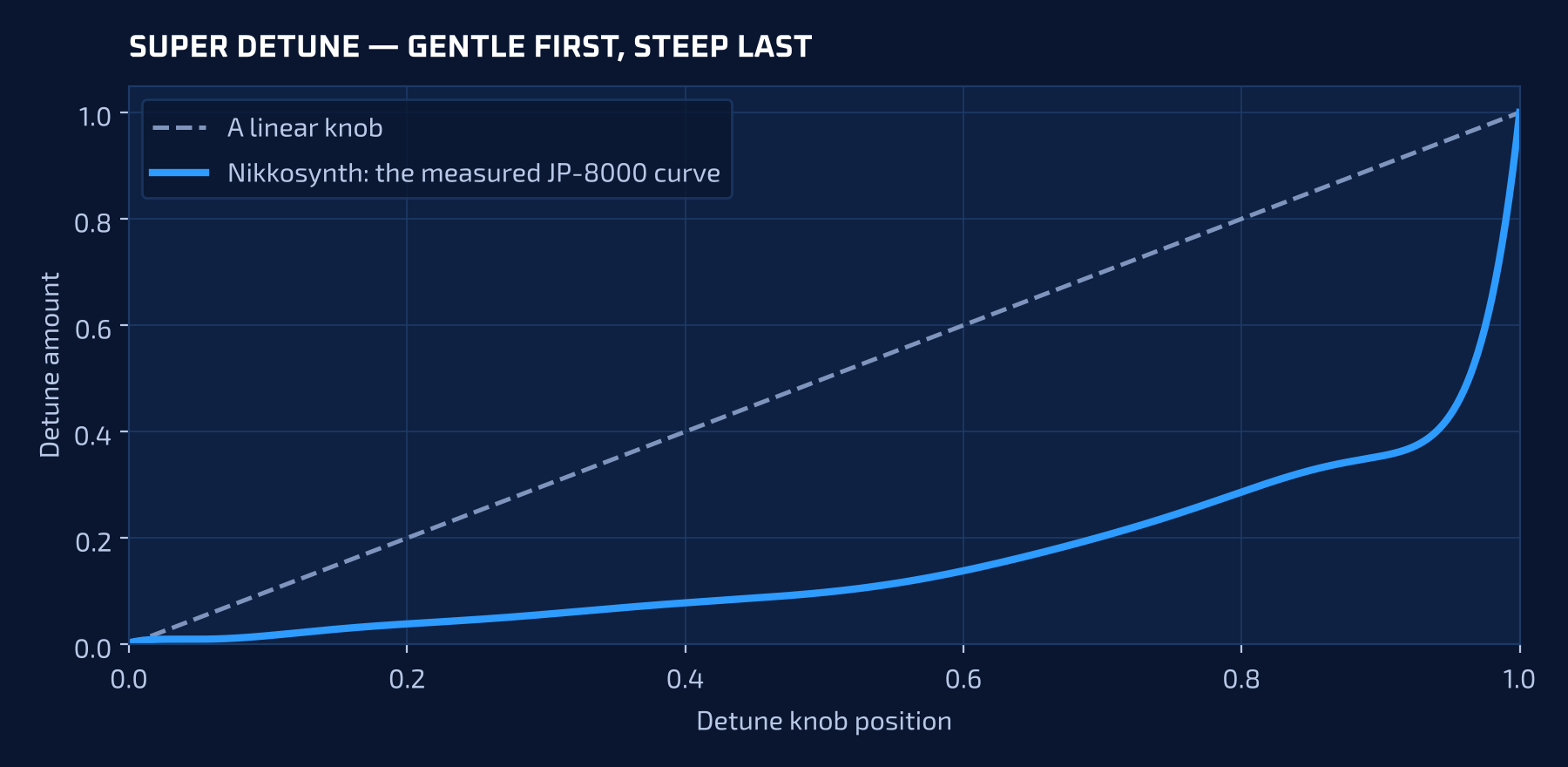
The measured Super Saw detune curve

The Super Saw, measured

Seven copies, detuned along the curve measured from the original instrument by Adam Szabo (KTH, 2010): uneven pairs at ±0.110, ±0.0629 and ±0.0195 of the fundamental, a detune knob that stays gentle to halfway then opens steeply, and a pitch-tracked high-pass at the note's own fundamental. Then generalised: the copies play any waveform — super-sine, super-square, super-wavetable.

The Nikkosynth signal path

Four analogue filters, four topologies

MINI is a Huovilainen Moog ladder with a tanh inside every stage; SEM is a state-variable filter with a cubic soft-clip in its feedback; 303 is a high-pass into a sharp resonant core; ARP is two cascaded 2-pole sections. A test compares every pair and fails if any two render the same thing.

The panel

Every plate, up close

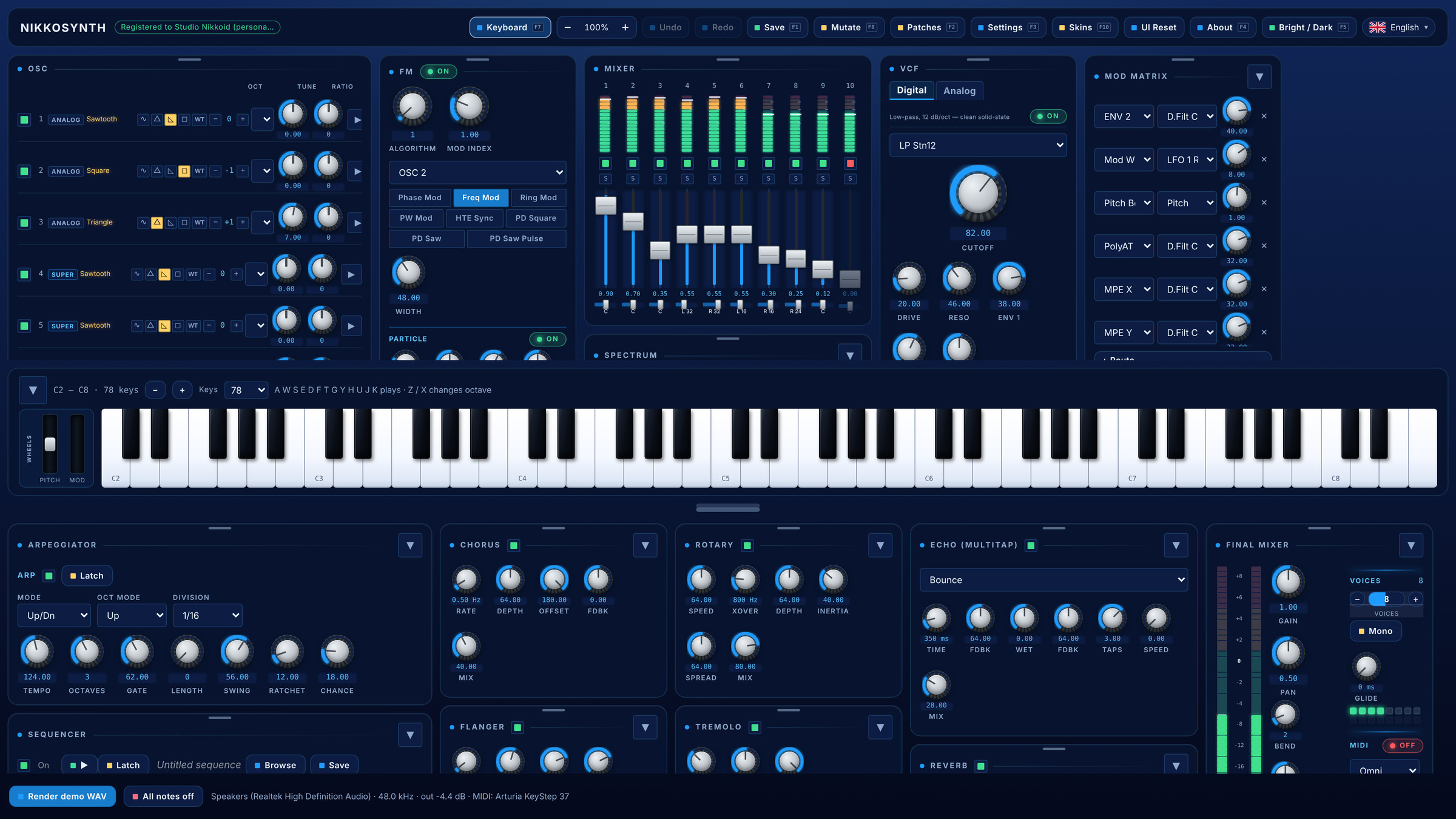
The whole instrument is on one face. Below it, each plate on its own, captured from the application at 200 % so every label is readable.

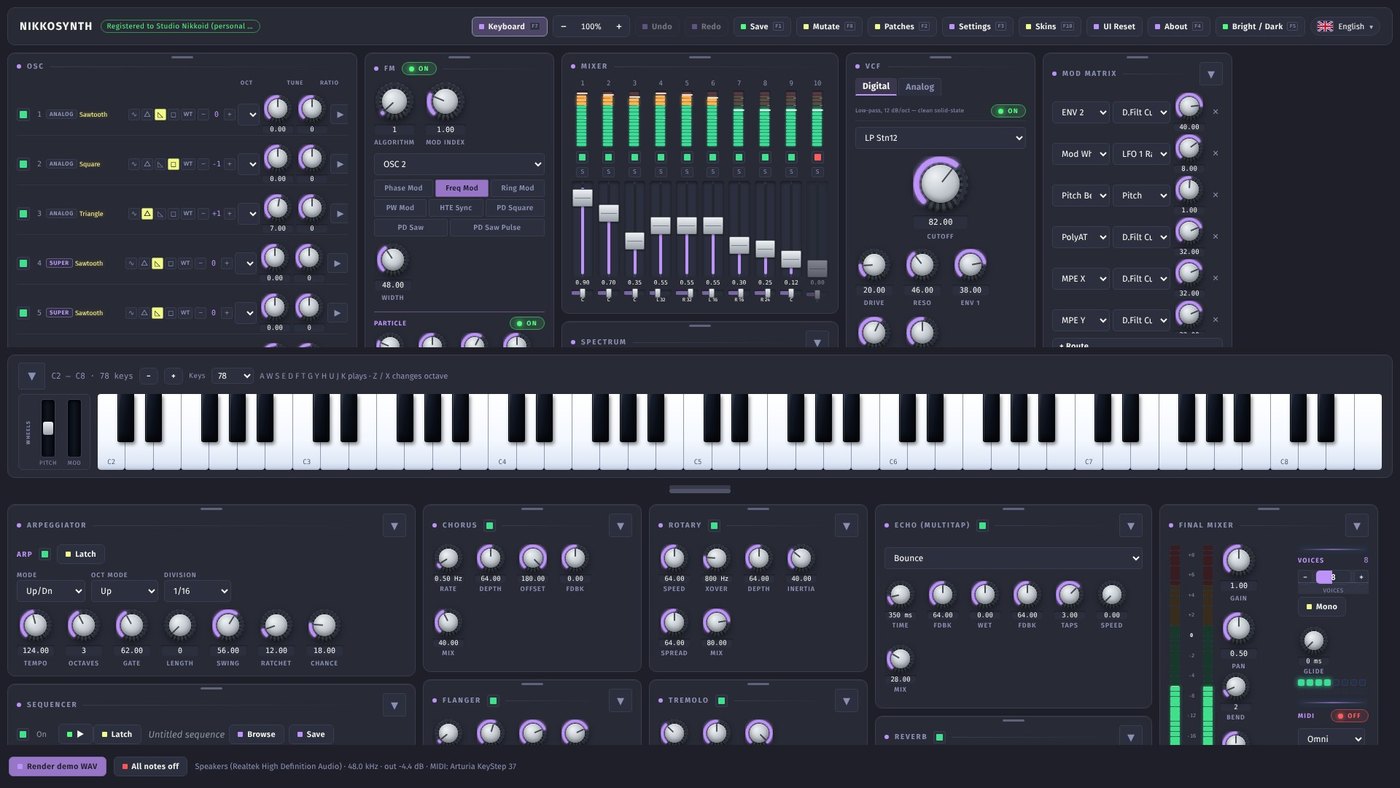
The whole Nikkosynth window
The whole instrumentSound-making plates on top, the keyboard, then the arpeggiator, sequencer, effects and Final Mixer.
The oscillators
The oscillatorsOne row per oscillator: Analog 1–3, Super 4–6, Karplus, DX7 and the two noise channels.
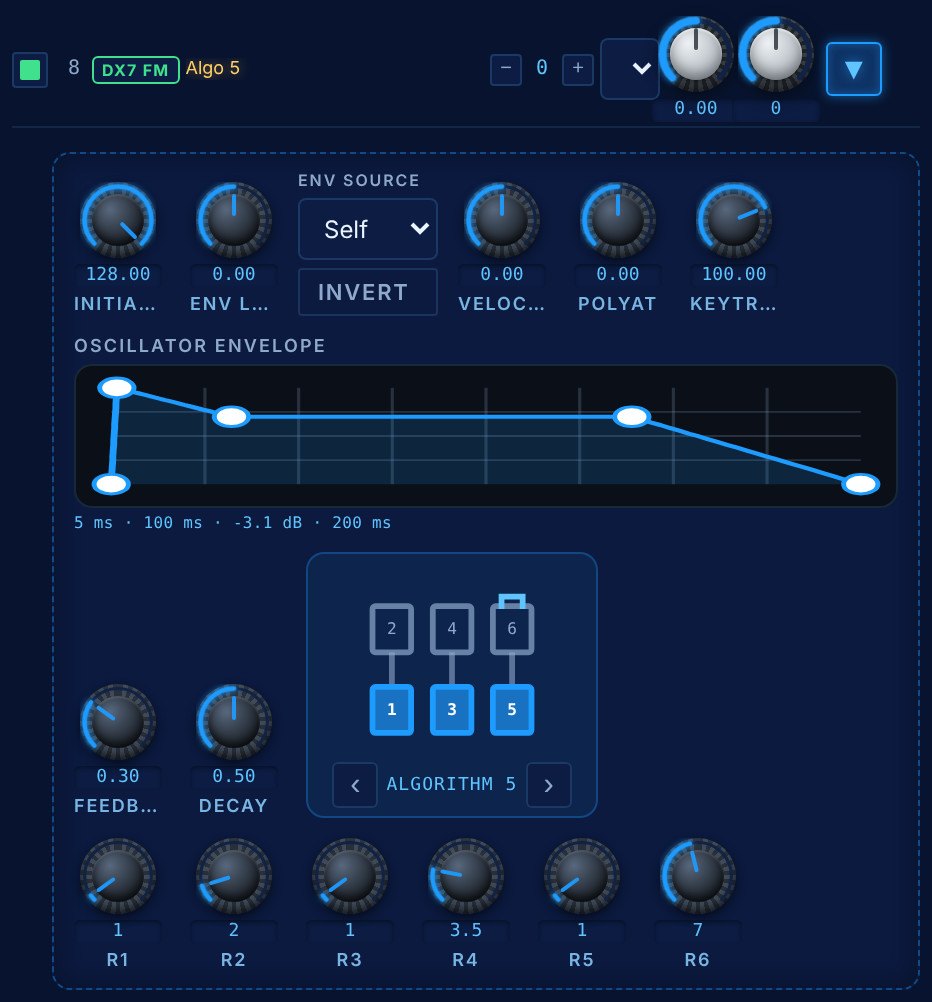
The DX7 page
The DX7 pageIts own envelope, the algorithm drawn from the routing table the sound uses, and six operator ratios.
The mixer
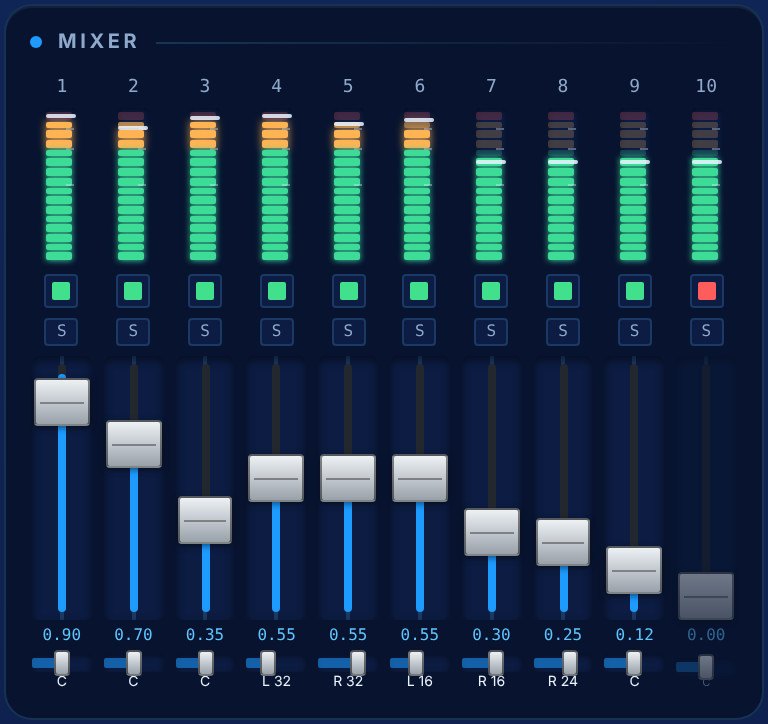
The mixerTen channel strips with meters, solo, faders and pan.
The spectrum
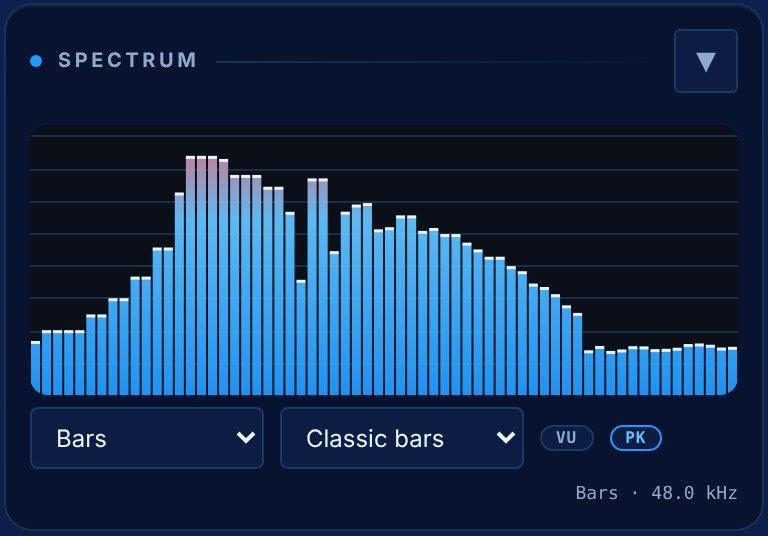
The spectrumA live view of the output — you see a muddy patch before you hear it.
Digital filter
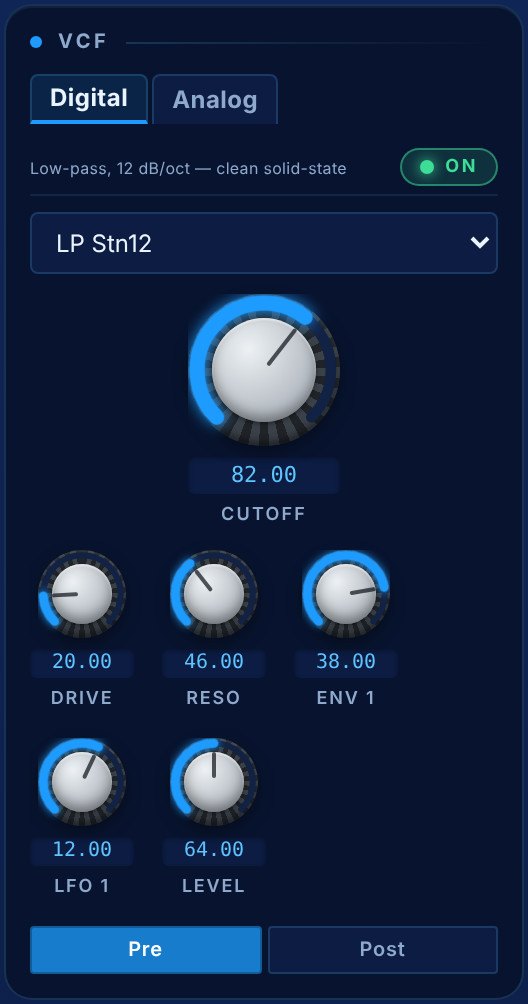
Digital filterEighteen models, one big cutoff, pre-wired ENV 1 and LFO 1.
Analog filter
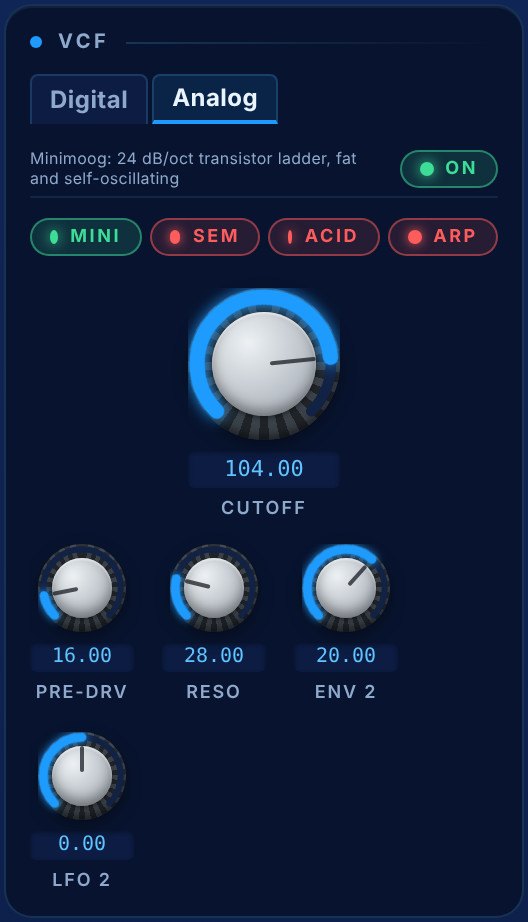
Analog filterMINI, SEM, ACID and ARP — four topologies, not four names.
The envelopes
The envelopesDAHDSR with a draggable curve, three segment curves, loops and Invert.
The sequencer
The sequencerEight tracks, sixteen steps a page, seven lanes per step and a live playhead.
The LFOs
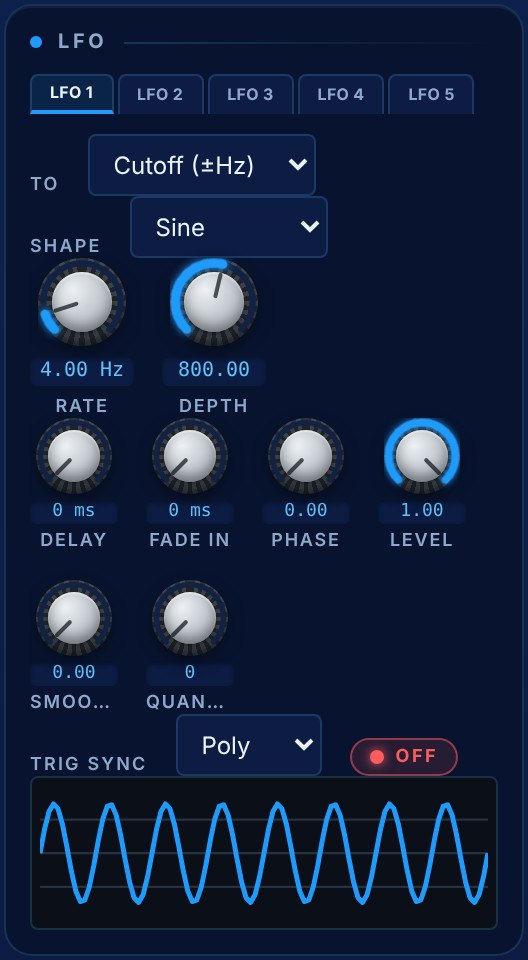
The LFOsEleven shapes, delay, fade-in, phase and the wave drawn live.
The matrix
The matrixThirty-two routes, with the wheels, aftertouch and MPE already wired.
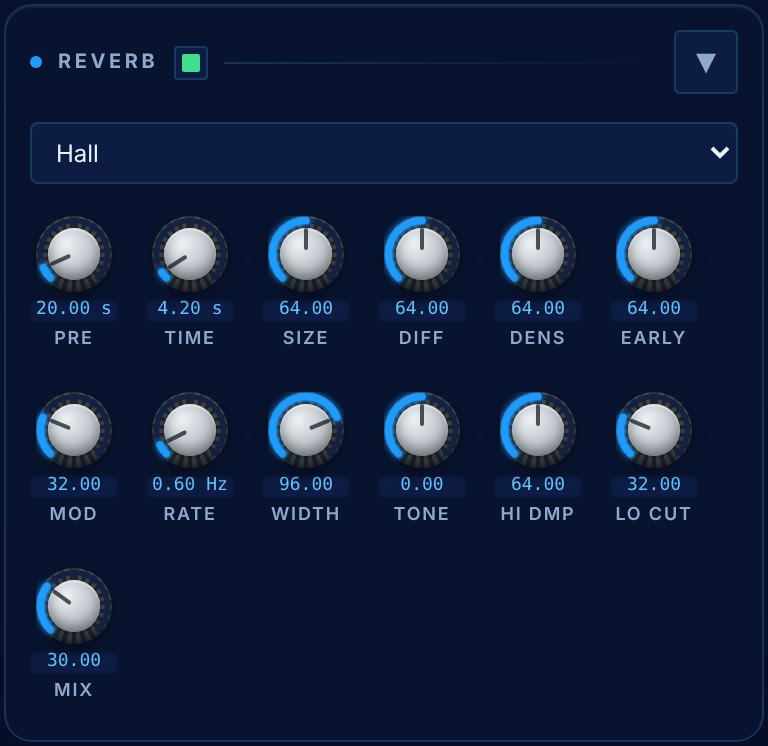
The reverb
The reverbRoom, Hall, Plate, Chamber and Shimmer, each with fourteen controls.
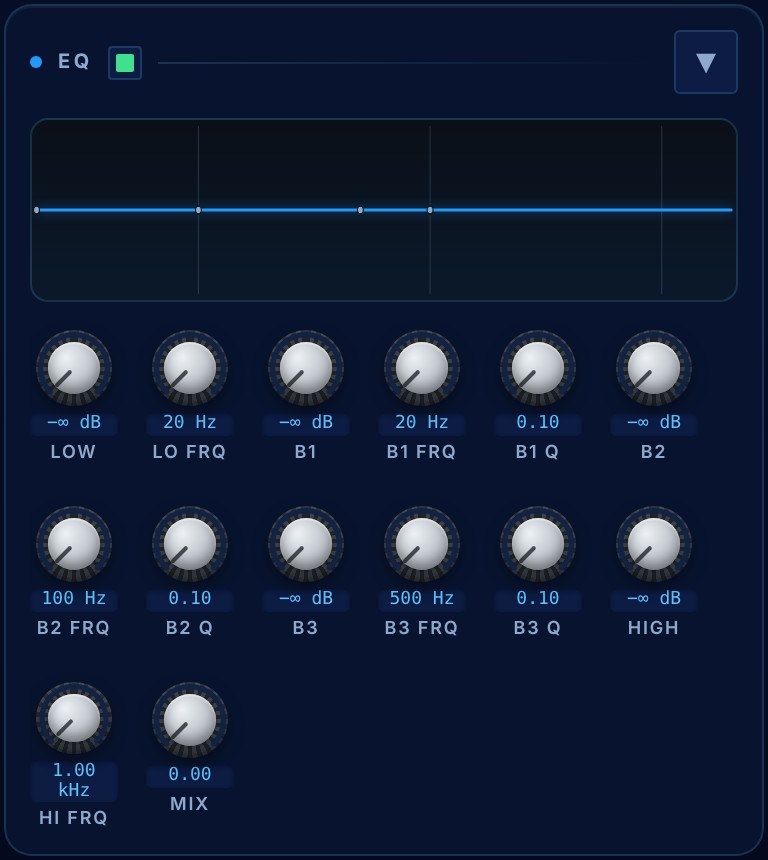
The EQ
The EQFive bands with a response curve you can drag.
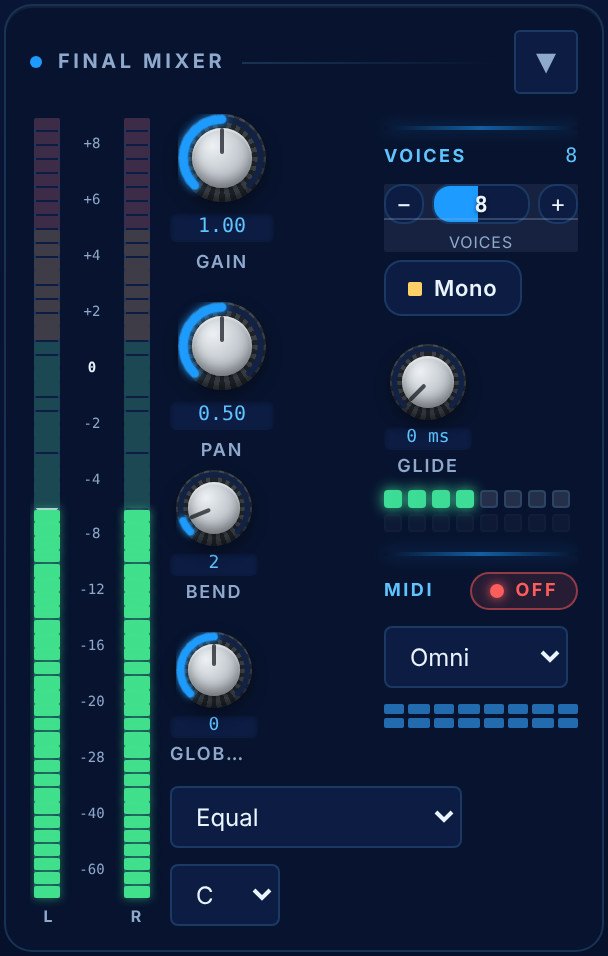
The Final Mixer
The Final MixerThe VU ladder, voices with Mono and Glide, MIDI and microtuning.
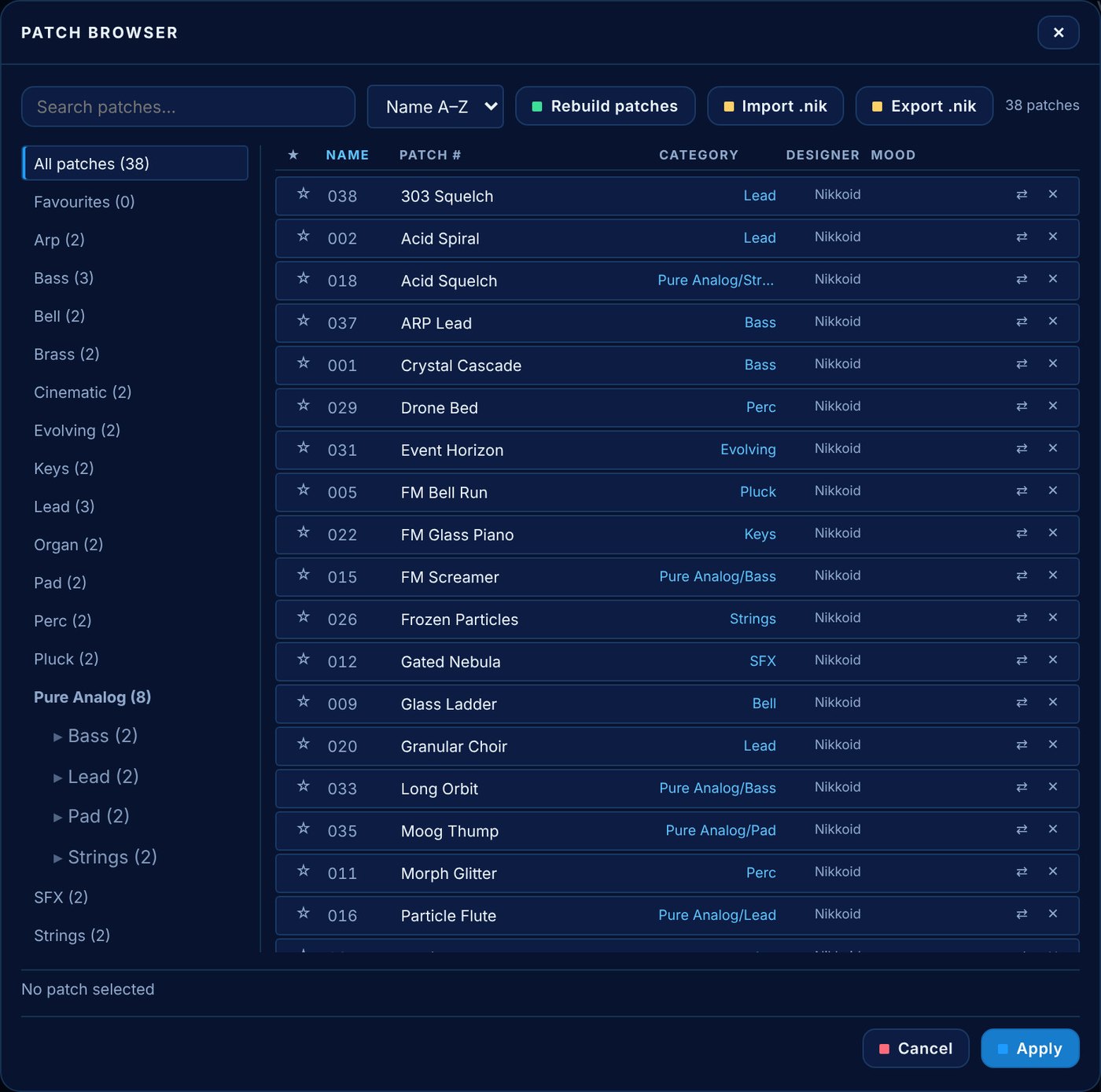
The patch browser
The patch browserFolders with sub-folders, favourites and search — clicking a row (or the arrow keys) loads and plays it, and Details lists what it uses.
The sequence library
The sequence library500 sequences in twenty genres, auditioned live.
The phaser
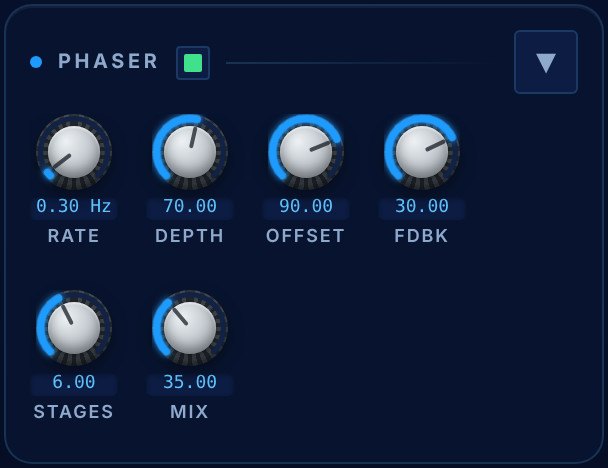
The phaserTwo to twelve all-pass stages, with feedback and stereo offset.

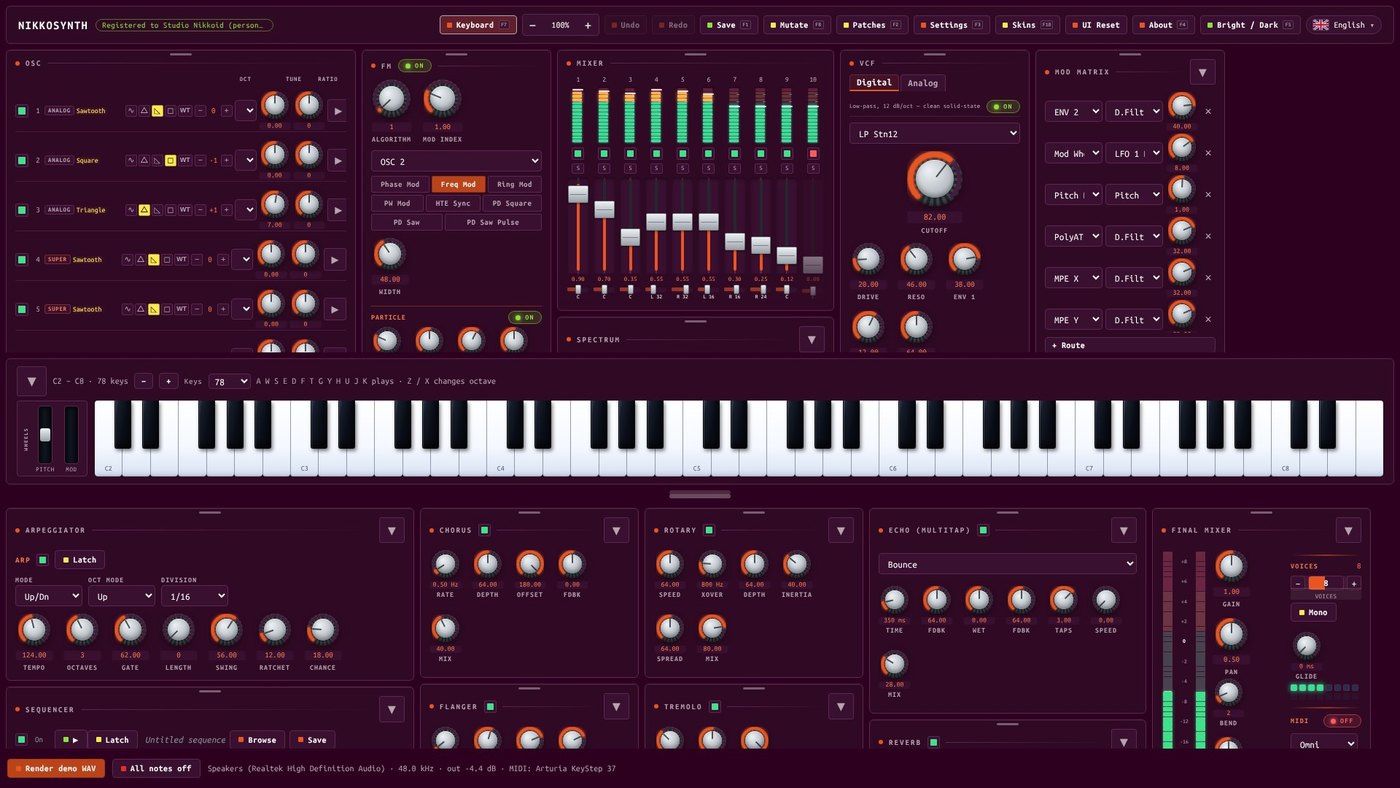
89 skins, shared with the Nikkoid family

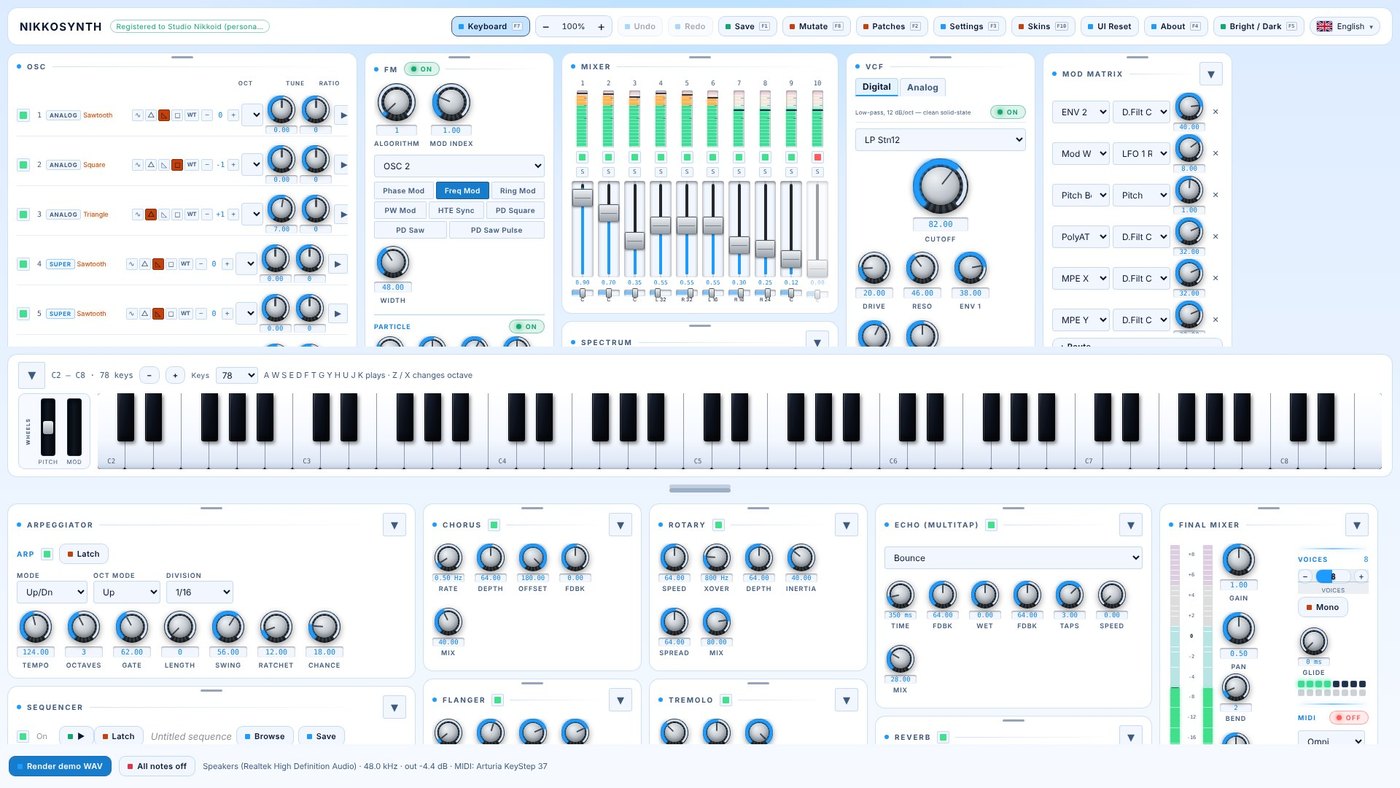
Nikkosynth in the Nikkoid Bright skin
Nikkoid Bright
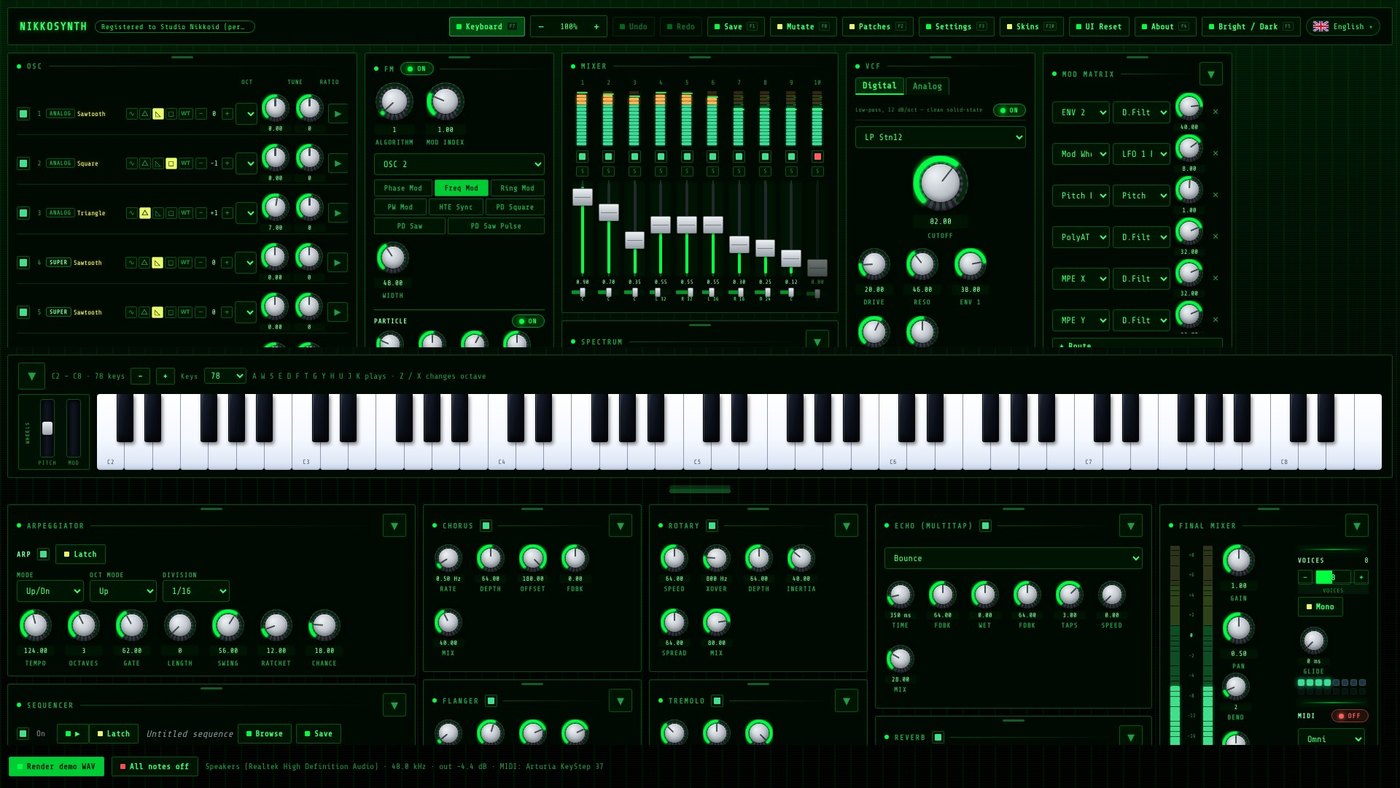
Nikkosynth in the Matrix skin
Matrix
Nikkosynth in the Dracula skin
Dracula
Nikkosynth in the Linux Terminal skin
Linux Terminal

Try it

Download

Free to download and free to try, with no time limit and no account. The personal licence is $89.

macOS

macOS build is on the way. The engine is portable; only the packaging is missing.

Linux

Linux build is on the way — the standalone and the plug-in share the same engine.

Every file, with sizes and checksums →

Licensing

One price, for life

Shareware done properly: the instrument works completely before you pay, and the licence is a single payment with no subscription.

Most people

Personal

$89 once

One person, any number of their own computers. No subscription, no renewal.

  • Every feature, no time limit
  • Every 0.x update included
  • Key delivered by e-mail, checked offline
Buy a licence

Company

per seat volume tiers

One seat for each person who uses it, with the per-seat price falling as the count rises.

  • Deployed by key file, no typing per machine
  • Same key format, same offline check
  • Invoices on request
See the tiers

Stop choosing between instruments

Try it for as long as you like. A licence removes the reminder.

Download Nikkosynth